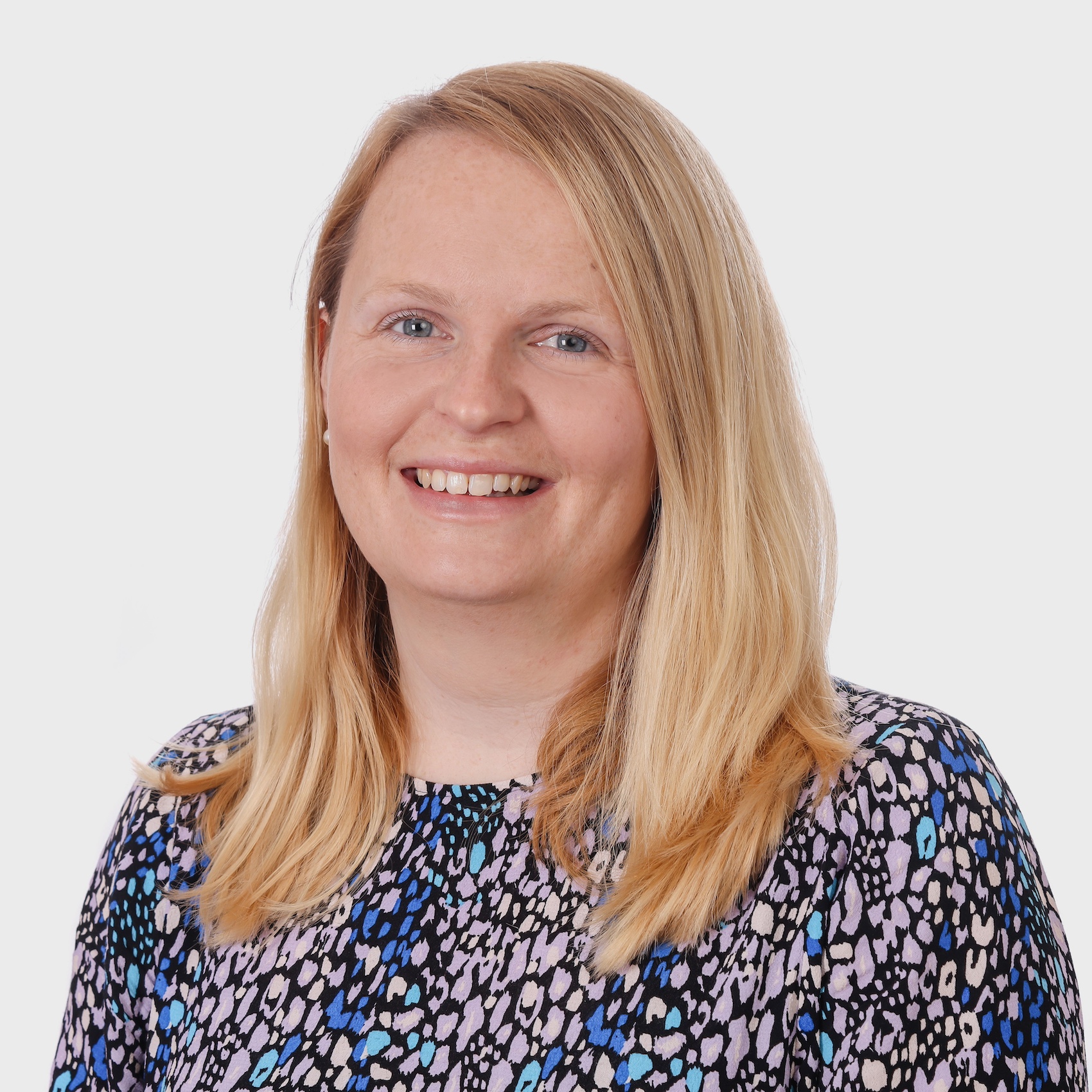
From Trainee to Partner, and Everything In Between
Partner, mentor, charity champion: Casidhe Baleri on ambition, balance and doing work that matters
A conversation with Casidhe Baleri, Partner at Saffery
Casidhe Baleri joined Saffery in Bournemouth in 2011 as a graduate trainee and never left. Today, she’s a partner, a mentor to the next generation, and one of the firm’s leading voices on the charity and not-for-profit sector. She speaks with warmth, precision and the easy authority of someone who has worked her way through every level of the firm.
An Unlikely Start
Q: A Maths and French degree doesn’t exactly scream accountancy. How did you end up here?
It didn’t feel like an obvious path at the time, no. But I’d always enjoyed problem-solving, and I liked working with people. When I looked at accountancy properly, those two things were at its heart. I joined Saffery in Bournemouth in 2011 as a trainee, and the office was about 35 people then, small enough that you were thrown in at the deep end fairly quickly, which suited me.
Q: And you stayed. That’s relatively unusual. What kept you?
The people, and the opportunity. I was given real responsibility early on. And then a pivotal moment came when a retiring partner handed me their portfolio. That kind of trust accelerates everything; you’re suddenly managing relationships, not just numbers. I think if you’re given that kind of opportunity, and you’re in the right place, you stay.
There’s also something to be said for knowing an organisation deeply. I’ve seen every part of how this firm works. That’s genuinely useful when you’re trying to help clients navigate difficult things.
“I was given real responsibility early on. That kind of trust accelerates everything.”
Partnership, Pregnancy, and Getting the Balance Right
Q: You were promoted to director while pregnant and made partner after your second maternity leave. That’s not a path everyone assumes is available to them.
I think that’s exactly why it’s worth talking about. The firm’s support during those periods was genuinely crucial. I wasn’t sidelined, and I wasn’t made to feel that stepping away was a career choice; it was just life. I came back part-time initially and settled on a four-day work week. Career progression and motherhood aren’t mutually exclusive, but you do need the right environment around you.
Q: How do you manage the balance day to day?
I’m deliberate about it. I set clear boundaries, and I stick to them. I do the school drop-offs and pick-ups. My husband is genuinely supportive and shares the load at home, which matters enormously.
And I fully switch off on holiday, which to me is important. You can’t recharge if you’re half-present. People sometimes treat that as a luxury, but I think it’s essential, for you, and for the people you come back to serve.
“You can’t recharge if you’re half-present. People sometimes treat that as a luxury, but I think it’s essential.”
A Passion for the Not-for-Profit Sector
Q: The charity sector isn’t where every accountant gravitates. How did that specialism develop?
It started before my career, really. At university, I volunteered for a student support helpline, a bit like the Samaritans. That experience shaped how I thought about organisations that exist to do good rather than generate profit. When I started building my portfolio professionally, I always gravitated towards charity clients. The work feels meaningful in a way that’s hard to articulate but easy to feel.
Q: What does your client base look like today?
It’s wonderfully varied. Care providers, schools, hospices, and museums, each with its own culture and pressures. I’m also a keen charity shopper, which I believe gives me a ground-level understanding of how many of these organisations operate. You see the volunteers, the stock rooms, the whole thing.
Q: What financial pressures are you seeing across the sector right now?
More than a few. National minimum wage increases are a good example, people assume they just affect the lowest-paid roles, but they compress salary bands right the way up. When you raise the floor, you often must raise the ceiling too, and not-for-profits are working with tight margins to begin with.
Fuel costs, heating costs, the wider cost-of-living crisis, reducing public donations, it all compounds. A hospice’s heating bill is not a trivial thing. A school’s operating costs are relentless. These organisations are resilient, but the current funding and cost environment is pushing many beyond what is sustainable without structural change.
AI, Grant Applications, and the Human Touch
Q: AI is transforming how a lot of organisations work. What’s the picture in the charity sector?
It’s genuinely interesting, and genuinely mixed. On the opportunity side, AI has real potential for fundraising: analysing donor patterns, identifying giving trends, and targeting appeals more precisely. For finance functions, there’s scope to automate a lot of the routine work, which frees people up for more meaningful analysis.
But there are risks too. I’ve heard first-hand from charities that have seen an increase in grant applications that feel generic, clearly AI-generated, less personal, and less compelling. That increases the burden on reviewers and arguably makes the whole process less effective. There’s also a worry about AI displacing roles rather than complementing them. The finance team in a small charity isn’t just processing numbers; they’re often holding institutional knowledge and relationships. In a regulated environment like charities, judgement, challenge and context are as important as efficiency—and those are not easily automated.
Q: So careful adoption rather than wholesale transformation?
Exactly. Technology should enhance what people do, not replace the judgment and humanity that make these organisations what they are.
Governance, Viability, and Hard Conversations
Q: What does governance work with charities actually involve?
More often than not, it’s reviewing and refining rather than fixing something fundamentally broken. We look at policies, board composition, segregation of duties, whether the right controls are in place and whether they stand up to increasing regulatory and stakeholder scrutiny. Trustee boards are more diverse than they used to be, which is positive, but there’s still room to grow.
I work with both senior management and trustees, and they have different priorities and different approaches to risk. Part of my job is making sure those conversations are connected, and that the picture the board sees reflects the reality the finance team is living with.
Q: With charity insolvencies rising, are you having more difficult conversations about viability?
Yes, more frequently. But I’d say clients are rarely surprised or underprepared. They usually know something is coming before we arrive to say it. The cost-of-living crisis has hit donations and therefore demonstrating impact to funders is becoming more important.
My role in those conversations is to help them navigate changes by reviewing forecasts, sharing what I’m seeing across the sector and helping with strategic planning. It’s not comfortable, but it’s necessary, and doing it well can make a real difference to the outcome.
Q: You’ve also noticed it’s become harder to recruit trustees?
It has. Being a trustee carries real responsibility, and that can feel daunting, particularly if you’re coming to it for the first time. What I’ve seen work well is charities adopting more formal recruitment processes, proper role profiles, and active outreach. It tends to yield a more diverse and better-suited pool than relying on word of mouth.
“My role in difficult conversations is to help clients navigate. It’s not comfortable but doing it well can make a real difference to the outcome.”
Mentoring the Next Generation
Q: You are the staff partner for the Bournemouth office. What does that involve?
Supporting career progression, development and wellbeing across the team. I care deeply about it. Having come through every level here myself, I understand what’s expected at each stage, and I believe that helps me empathise with where people are. I can show that progression is genuinely achievable here, because I’ve lived it.
I also think it’s important to say clearly: investing in people is as important as client work. The two are connected. The quality of what we deliver to clients depends entirely on the quality and well-being of the team delivering it.
Q: What advice do you give to junior staff who are finding the work-life balance difficult?
Set your boundaries early and defend them. It’s much easier to establish expectations at the start of a career than to try to renegotiate them later. And find the support around you, at work and at home. Neither is optional.
Life Beyond the Office
Q: What does unwinding look like for you?
Cooking, mainly. My mother was a food technology teacher, so I grew up surrounded by it. Making something from scratch, keeps your hands and your mind busy in a completely different way to work. By the time you sit down to eat, you’ve genuinely switched off.
Q: And travel?
I love it. We’ve been to Thailand, Canada, and South Africa in recent years; Costa Rica is on the horizon. Travelling and immersing yourself somewhere unfamiliar, does something to your perspective. You come back with more to offer, I think. Broader, somehow.
I find it all connects, really. If you’re running on empty, everyone around you feels it; your family, your clients, your team. Holidays, cooking, being with the kids, that’s not time away from the job. That’s what makes the job sustainable.
From Trainee to Partner, and Everything In Between